
Journal · Irrigation
Watering your lawn correctly
Timing, depth and frequency for warm-season lawns in the Dallas–Fort Worth region, and how to check your sprinklers in fifteen minutes.
Most lawns in the Dallas–Fort Worth region are warm-season grasses: Bermuda, St. Augustine and zoysia. They grow hard through the heat of summer, slow down in fall and go dormant in winter. Watering well means matching that rhythm.
How much
In summer, an established warm-season lawn typically needs about an inch of water a week, counting rain. In the hottest stretches it may need a little more; in spring and fall, often less. A lawn that needs water will tell you: the blades fold or turn a dull blue-gray, and footprints stay visible instead of springing back.
When
Water early in the morning, ideally finishing before mid-morning. Less water is lost to wind and evaporation, and the grass dries during the day. Evening watering leaves blades wet overnight and can encourage disease.
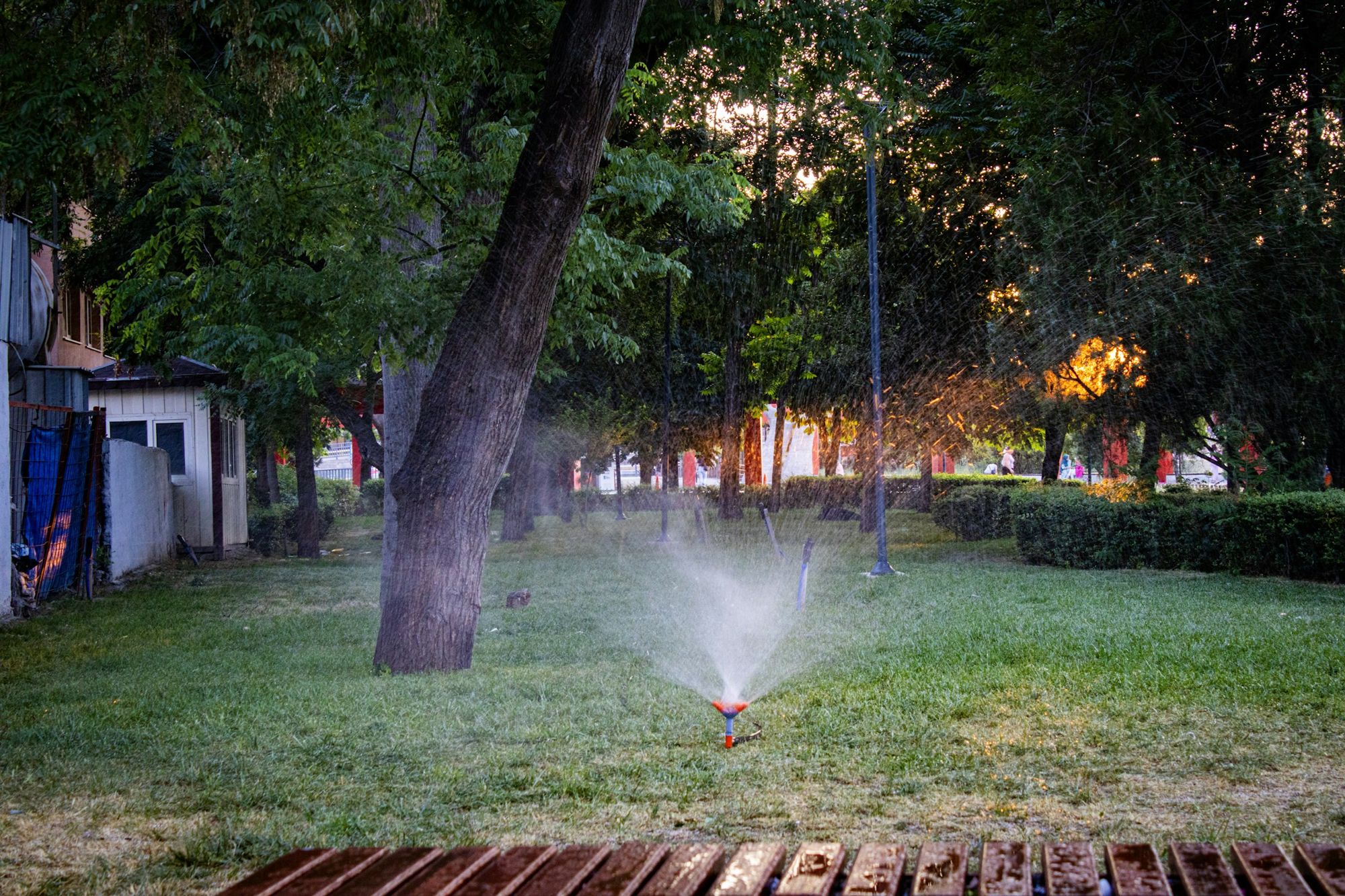
Early morning, deep and infrequent: the three rules of watering.
How often
Once or twice a week is enough for most established lawns. Deep, infrequent watering pushes roots down, where the soil stays cooler and moister.
Much of North Texas has heavy clay soil that absorbs water slowly. If water runs off onto the sidewalk before the lawn is soaked, split each watering into two or three shorter cycles with a break of about an hour between them. This is often called cycle and soak.
Check your sprinklers in fifteen minutes
- Set several empty, straight-sided cans (tuna cans work well) around one zone.
- Run that zone for fifteen minutes.
- Measure the water in each can. Multiply the average by four to see how much the zone puts down in an hour.
- If some cans are nearly empty and others full, a head is clogged, tilted or blocked. Fix it before adding more run time.
Follow local rules
Many North Texas cities and water districts set watering-day schedules and time-of-day limits, and they tighten them in dry years. Check your city’s current rules before setting a controller, and add a rain or freeze sensor if your system does not already have one.
In winter
Dormant warm-season lawns need very little water. An occasional deep watering during long dry spells is usually enough. Turn the controller down, or off, when the grass goes brown for the season.
LawnPoint branches open in 2027, with irrigation checks part of every maintenance plan.
Next
The Journal